

The first sign isn’t a bottle count. It’s improvisation: bottles on top of the fridge, in hall closets, stacked behind the couch, stored wherever there’s space. The five signs below are what collectors in the tri-state area usually hit before they ever think about calling a storage facility.
1. You’ve started improvising where bottles go
The first sign is rarely a count. It’s geography. A case ends up under the bed because the wine fridge is full. A few bottles sit upright on a kitchen counter because there’s nowhere else to put them. Someone in the household has quietly given up on the system.
If you’re choosing between a vintage Burgundy and a usable guest room, the math has already broken. Improvised storage also means improvised conditions: heat from a radiator, light from a kitchen window, vibration from a laundry room. None of these are theoretical risks for bottles worth protecting.
2. The temperature and humidity in your home won’t stay steady
Wine wants roughly 55°F and 60 to 70 percent relative humidity. A basement in Brooklyn might hit that in November and miss it by 20 degrees in July. A south-facing closet in Hoboken has a different problem entirely. It cooks.
Home HVAC is built for people’s comfort, not bottle preservation. Seasonal swings, sunny walls, and a kitchen that runs hot during dinner parties all push conditions away from the safe zone. Once you start noticing the gap on a thermometer, you’ve already lost some stability you can’t get back.
3. Your insurance wouldn’t actually cover a loss
This one surprises collectors. Most standard homeowner’s policies cap coverage on collectibles, often in the $1,000 to $2,500 range, and many exclude mechanical or electrical breakdown of refrigeration units. A wine fridge that dies over a long August weekend can quietly cook everything inside before anyone notices.
If you’d need to write off a $5,000, $10,000, or larger loss because the policy wasn’t built for a serious collection, the storage arrangement itself is the risk. According to InVintory’s collector insurance guide, that’s exactly the kind of gap a standalone wine policy is built to close, since it covers temperature and humidity failure the way a standard homeowner’s rider typically doesn’t.
4. You can’t say with confidence what’s in your collection
No inventory, or a spreadsheet nobody updates, leads to real costs. People buy duplicates of bottles they forgot they owned. They open a 2010 Barolo that’s already past its window. They can’t remember whether the case in the back is the one they bought last year or five years ago.
A barcode-based inventory solves this in a way a notes app never will. Every bottle in gets scanned, every bottle out gets scanned, and the database stays current. For collectors carrying meaningful value, knowing what’s on hand isn’t a luxury. It’s basic hygiene.
5. Your life changed faster than your storage plan did
A move from a Manhattan one-bedroom to a Hoboken brownstone didn’t free up the square footage you’d planned on. A renovation took the basement out of rotation for eight months. A new job has you in Europe every other week. An inheritance added 80 bottles overnight.
Collections grow on their own schedule. Storage rarely catches up on the same timeline. When the gap is months wide, the bottleneck isn’t the wine. It’s the room.
How many of these sound familiar
A scannable version:
- Bottles showing up in closets, on counters, near heat sources
- Temperature or humidity swings past the 55°F and 60 to 70 percent range
- Insurance that wouldn’t actually pay out on a real loss
- No reliable inventory, duplicate purchases, forgotten bottles
- A move, renovation, more travel, or a sudden jump in collection size
If three or more apply, the next question is usually where to put the bottles.
Finding a wine storage facility near me
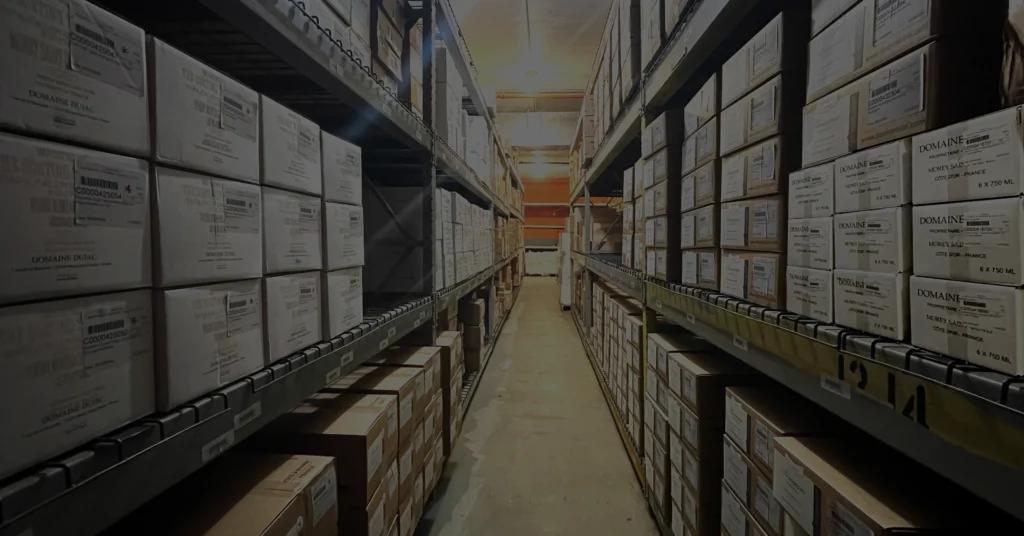
Searching for a wine storage facility near me in NYC or NJ returns a mix of options: private locker facilities, climate-controlled warehouses, and a few retailers with side businesses in storage. The differences matter.
For collectors in Manhattan, Brooklyn, Queens, the Bronx, or Staten Island, the practical question is usually commute distance and access hours. For collectors in Jersey City, Hoboken, Newark, or the rest of Hudson and Bergen County, the question is whether the facility also gives you a defensible record of what you own.
Mana Wine operates inside the GRM building on Coles Street in Jersey City, and has been covered by the New York Times, which is a more interesting answer to “where is your wine stored” than a generic warehouse.
The facility tracks every bottle with a barcode-based inventory system, so what’s actually in a collection is always confirmed, not estimated or guessed at from memory. For collectors who couldn’t answer question four above, that alone is often the deciding factor.
Private wine lockers are available in a range of sizes, scaled to what you actually drink and age rather than a one-size-fits-all plan. For collectors who’d rather not make a second trip, Mana Wine also offers wine delivery across NYC, Long Island, NJ so bottles can come to you when a case comes up at auction or a shop in the city.
If you’re comparing options, the private wine lockers page walks through how the program is structured. Quotes are sized to the collection.
Frequently asked questions
What temperature and humidity should wine be stored at?
Wine keeps best at a steady 55°F with relative humidity between 60 and 70 percent. Anything outside that range, especially sustained swings, ages bottles faster than intended or dries out corks. Home HVAC isn’t built to hold those numbers year round, which is one of the most common reasons collectors move to dedicated storage.
Will my homeowner’s insurance cover my wine collection?
Most standard homeowner’s policies cap collectibles coverage well below the value of a serious collection, often in the low thousands of dollars, and frequently exclude mechanical or electrical failure of refrigeration units. Collectors with meaningful value usually need either a rider or a facility that carries its own coverage. InVintory’s collector insurance guide covers what that gap actually looks like and how a standalone policy closes it.
How do I know what’s actually in my wine collection?
A reliable inventory. The simplest version is a barcode-based system: every bottle in gets scanned, every bottle out gets scanned, and the database is current. Spreadsheets and notes apps work for a case or two but break down past a few hundred bottles, which is when duplicate purchases and forgotten bottles start costing real money.
Where can I find a wine storage facility near me in the Tri-State area?
Start with your own commute, since access matters as much as climate control. In Manhattan and the outer boroughs, look for facilities with flexible pickup hours. In Jersey City, Hoboken, Newark, and the rest of Hudson and Bergen County, Mana Wine operates inside the GRM building on Coles Street and tracks every bottle with a barcode inventory system.
Is it worth renting a private wine locker for a smaller collection?
Sometimes, especially if the collection has outgrown a home setup but the collector still wants to pull bottles regularly without coordinating a warehouse visit. Lockers are typically scaled to the collection and billed accordingly. For collectors in the tri-state area, the value tends to come from stable conditions, defensible inventory, and not having to think about the wine between visits.
Sources for third-party figures cited above: How to Insure a Wine Collection (InVintory), (https://invintory.com/blog/how-to-insure-a-wine-collection/)
