
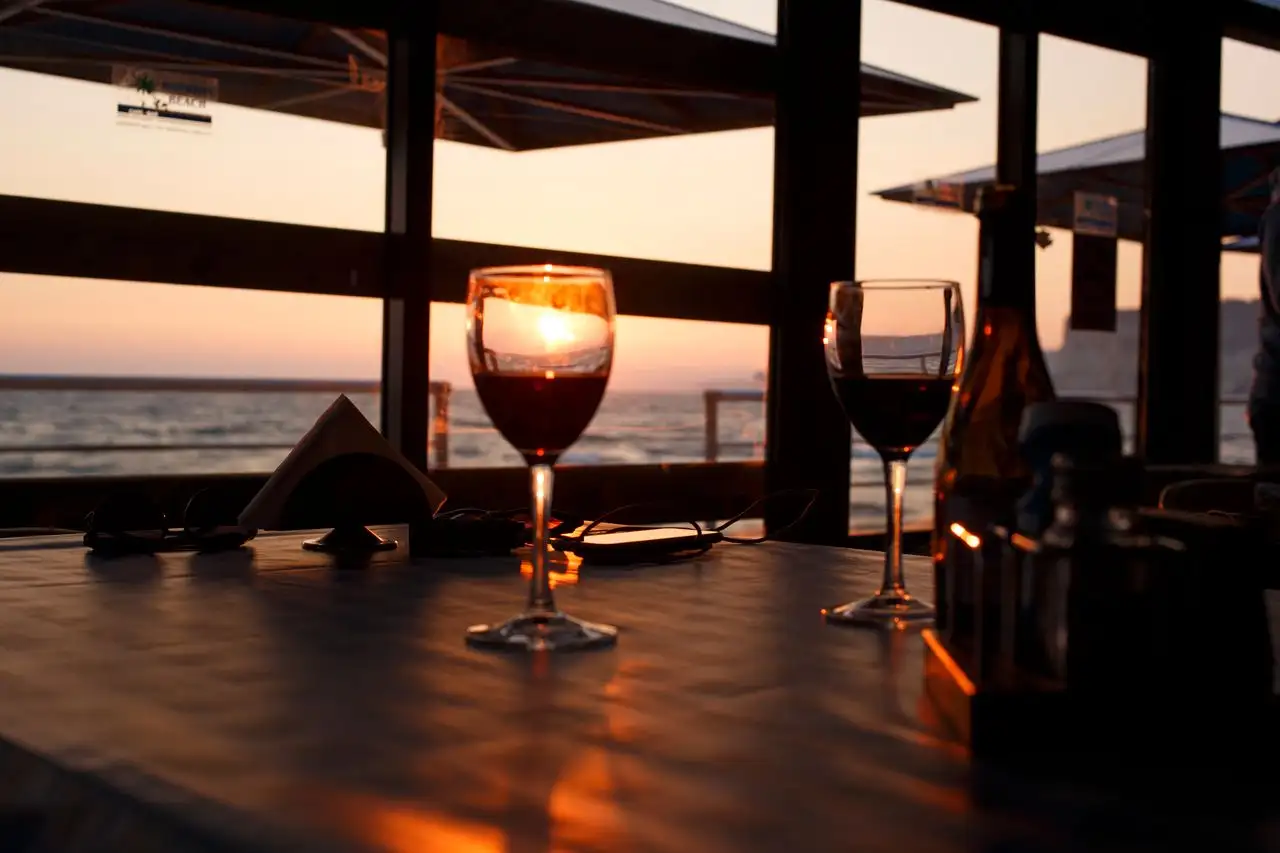
This stretch of September has a specific kind of weather. The days are still hot, but the evenings cool off just enough that a full-bodied red doesn’t sound absurd. Most people, though, just keep cracking whatever pale pink wine was left over from July. That works, sort of. But the last warm nights of the year in NYC actually call for a slightly different short list.
Rosé that still works past Labor Day
A pale, bone-dry Provençal rosé is a July wine. It’s pretty, it’s cold, and it goes fast. By late August or early September, the same bottle can start to taste thin and a little less interesting.
A fuller-bodied rosé, the kind from Tavel in the southern Rhône or a Spanish rosado made from Garnacha, has more weight and red-fruit character. It’s a shade darker than the beach-house pink, and it can stand up to actual food. Think grilled vegetables, a slightly heartier salad, anything with a little char. Rosé generally serves best at fridge temperature, somewhere in the 44 to 55°F range, so the fridge door is fine.
Chilled reds for when it’s not quite sweater weather
Chilled reds are an underused category. The trick is taking the edge off without killing the fruit. A Beaujolais (made from Gamay) is the classic move. It drinks bright and juicy served cold, and it still reads as a red wine rather than something that wandered out of the white section.
A Loire Valley Cabernet Franc or a light Sicilian Frappato also take well to a short stint in the fridge before serving. The general idea: treat the chill like you would a white. Enough to knock the heat out, not enough to mute what made the bottle worth opening in the first place. Cool reds serve best in the 55 to 60°F range, noticeably warmer than white wine but cooler than a typical red is poured.
Something with bubbles for the last rooftop night

A crisp Cava or a grower Champagne fits a late-summer gathering and won’t fight whatever ends up on the table. A Pét-Nat (short for pétillant naturel, a lightly sparkling wine made with minimal intervention, typically cloudy and a little funky) has become popular for casual late-summer drinking. It’s more suited to a rooftop cooler than a formal toast. Sparkling wine generally serves ice cold, around 38 to 45°F, though higher-quality examples like vintage Champagne benefit from warming slightly before drinking so the aromas can open up.
Orange wine, if the group is up for something different
Orange wine is white wine grapes fermented with their skins left on, which gives it more tannin and texture than a typical white. It sits somewhere between a white and a light red. It’s a good fit for a gathering where people are open to trying something new, and it’s food-friendly enough to pair with a range of dishes.
What to bring if you’re the guest, not the host
The safest bottle to bring to someone else’s place is one that’s already good cold and stays fine as it warms up over the course of the night. A Vinho Verde from Portugal, a dry Txakoli from the Basque Country, or a Cava all fit that description. None of them require the host to do anything beyond opening them, and they won’t fall apart if the ice bucket runs out at 11 p.m.
Keeping the good stuff cold without ruining it
Rosé and lighter reds don’t need the deep chill a Sauvignon Blanc or other crisp white gets. A short stint in an ice bucket (ice and water, not just ice) is usually enough. Over-chilling mutes the fruit that made the wine worth bringing in the first place. An opened bottle that isn’t finished generally holds up fine in the fridge for a day or two with the cork back in.
A rooftop bottle just needs to survive one warm night. An actual collection needs conditions that hold steady for years, and that’s a different problem entirely. If the gap between a casual summer bottle and an actual collection that needs real storage has started to feel real, Mana Wine is built for exactly that. Pour something good while the weather still lets you.
