On a wine label, “vintage” simply means the year the grapes were harvested. It says nothing about whether a bottle is old, rare, or valuable. What turns a vintage-dated bottle into an aged one is time in storage, and what that time does depends largely on where the bottle spends it. That is why vintage wine storage matters for any collection that includes bottles meant to sit for years. This guide covers what vintage actually means on a label, how long wine can realistically age, which conditions matter most for aged wine storage, and what to look for in professional vintage wine storage across New York and New Jersey.
What Does “Vintage” Mean in Wine?
On a wine label, the vintage is the year in which the grapes for that wine were harvested. A bottle labeled 2015 was made from grapes picked in 2015. That single year is the whole meaning of the term, and it has nothing to do with whether the wine is old, rare, or collectible.
In the Southern Hemisphere, where the growing season runs from October to April, wines are vintage-dated with the later year.
The weather of that single year shapes the grapes. Sunshine is the defining feature of a vintage. Too much rain and cloud can keep grapes from fully ripening and leave them more prone to rot and disease. Overly hot, sunny conditions can leave wines flabby or with bitter tannins. That is why bottles from the same producer can taste very different from year to year, and why vintage matters for wines built to age.
Not every wine carries a vintage. Non-vintage wine is made by blending multiple years together, and is built for a consistent house style rather than a snapshot of one season. Non-vintage Champagne, labeled N.V. on the bottle, is the usual example.
In everyday conversation, “vintage” is sometimes used to mean “old.” On a label it means only the harvest year. A bottle becomes aged by sitting in storage, and how well it ages is a separate question that depends on the wine and on conditions.
How Long Can Wine Age?
Most wine is not meant to age at all. Wine Folly estimates that about 95 percent of wines are not built for long cellaring, and Wine Spectator points out that only a small percentage of fine wines benefit from long-term aging. Most bottles are at their best within a few years of release.
What separates the bottles that can age from the ones that cannot is a small set of traits that act as natural preservatives. Acidity, tannin (polyphenols), sweetness, and alcohol level all play a part in how well a wine holds up over time.
Wine Folly offers a rough guide to how long different styles can age, and is upfront that it is somewhat over-simplified. Used as a starting point, it looks like this:
| Style | Approximate aging potential |
| Sauvignon Blanc | about 4 years |
| Chardonnay | about 10 years (longer for Bourgogne) |
| Pinot Noir | about 10 years (longer for Bourgogne) |
| Cabernet Sauvignon | about 10 to 20 years |
| Nebbiolo | about 20 years |
| French Sauternes | about 15 to 25 years |
| Vintage Port | about 50 to 100 years |
Two patterns stand out. White wines generally have a shorter aging timeline, and dry white wines rarely last past 10 years. Fortified wines last the longest of all wines. These are guides, not guarantees. A bottle only reaches the end of its range if it is stored well, which is the topic of the next sections.
Why Conditions Matter More as Wine Ages
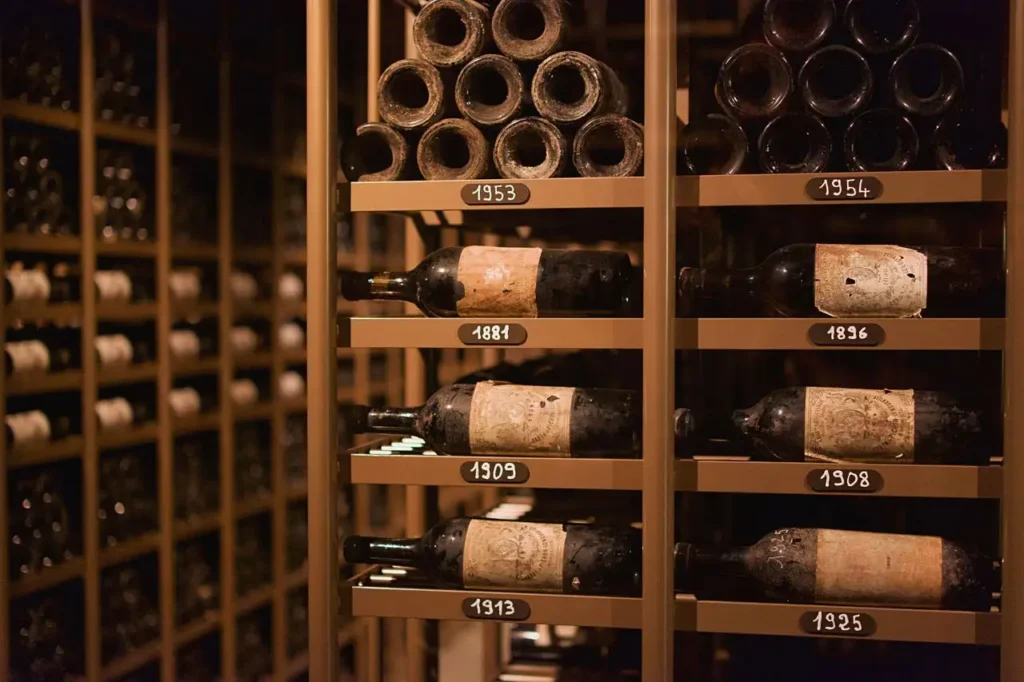
Time magnifies whatever the storage environment does to a bottle. A bottle that sits through one bad summer is not in the same shape as one that sits through ten. The four conditions that matter most for an aging bottle are:
- Heat. Temperatures higher than 70°F will age a wine more quickly than is usually desirable. If it gets much hotter, the wine may get “cooked,” resulting in flat aromas and flavors.
- Temperature swings. Avoid rapid, extreme, or frequent swings. Aim for consistency. Minor fluctuations are nothing to lose sleep over.
- Light. Sunlight, specifically its UV rays, can degrade and prematurely age wine. Bottles meant to sit for years should spend those years out of direct sun.
- Vibration. Significant vibrations could possibly disturb the sediment in older wines and keep them from settling, potentially making a glass taste gritty. For short-term storage this is unlikely to matter, and Wine Spectator notes there is little evidence documenting the effects of subtle vibration.
What Does Vintage Wine Storage Require?
Putting real numbers on wine storage temperature, humidity, light, vibration, and bottle position gives a collector something concrete to check against. Here is what Wine Spectator and Wine Folly’s cellar guide recommend, side by side.
| Condition | What to aim for |
| Temperature | 45 to 65°F, with 55°F often cited as close to perfect (Wine Spectator). Wine Folly’s cellar guide gives a tighter constant 55 to 59°F. |
| Humidity | About 70 percent is the conventional target, with 50 to 80 percent considered safe (Wine Spectator). Wine Folly gives 55 to 75 percent. |
| Light | Stored in darkness or kept away from direct sunlight and strong UV exposure. |
| Vibration | Kept to a minimum, especially for older bottles with sediment. |
| Bottle position | Bottles meant to age are traditionally stored on their sides to keep the liquid against the cork. Standard for an aging collection, though not necessary for bottles opened soon or with alternative closures such as screwcaps. |
Wine Spectator’s broader range and Wine Folly’s tighter one overlap, and holding either consistently matters more than hitting one exact number. Wine Spectator puts it this way: avoiding rapid, extreme, or frequent temperature swings is more important than achieving a perfect 55°F.
Can You Age Wine in a Wine Cooler?
It depends on the unit. A wine cooler is a standalone appliance designed to maintain a consistent temperature, and some are set to a serving temperature rather than a range suited to long-term storage. A wine cellar, by contrast, is a cabinet or an entire room built for aging: a consistent temperature around 55°F, humidity control, and some way to keep wine away from light and vibration.
Before putting bottles meant to age into a cooler, three checks are worth making. Does the unit hold a steady temperature around 55°F? Does it control humidity? Does it keep bottles away from light and vibration? If the answer to any of those is no, the bottles will probably be better off in a setup built for aging. Wine Spectator’s advice is direct: anyone buying wines to mature should consider professional-grade storage.
Why Home Storage Often Falls Short for Aged Wine
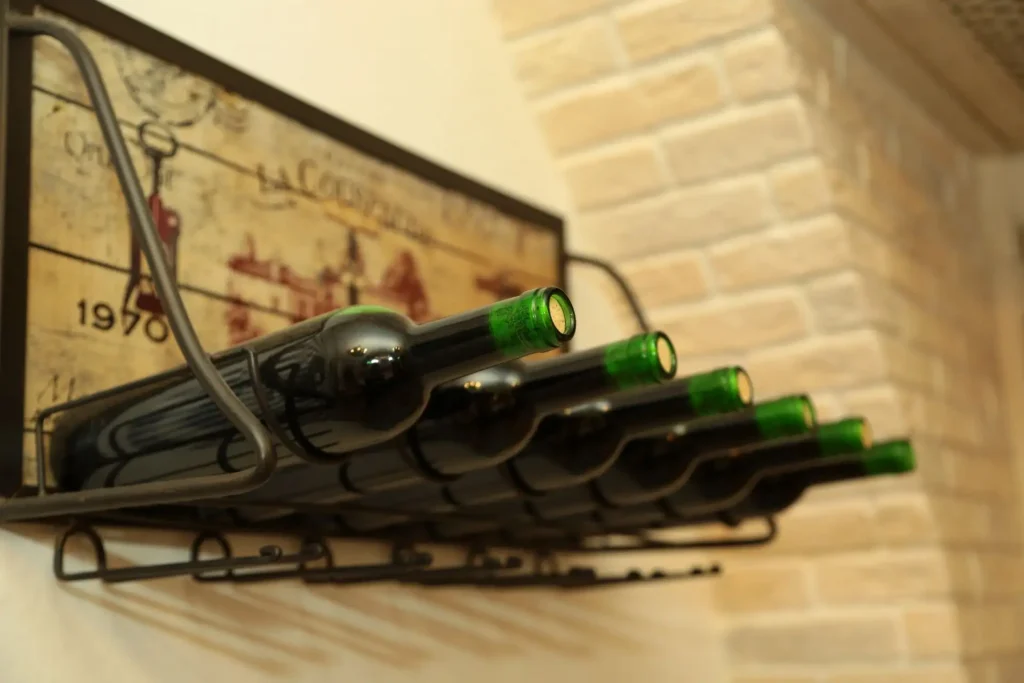
Most homes are not built around these numbers. A closet, a basement corner, or a growing stack of boxes in a home office can run warm, catch afternoon sun, or swing with the seasons. For everyday bottles opened soon, the risk is small. For bottles that are hard to replace and meant to sit for years, it is the main risk to the collection.
Vintage Wine Storage in NYC and New Jersey: How Mana Wine Handles It
Mana Wine is based in Jersey City, NJ, and serves collectors across a 100-mile radius from the facility. That area covers New Jersey, all five boroughs of New York, Long Island, the lower Hudson Valley, eastern Pennsylvania, and coastal Connecticut. Pickup and delivery runs between a collector’s home or office and the facility, so bottles can go in and come back out without a separate trip.
The facility is entirely temperature and humidity controlled. The cellar manager monitors both daily, to within 2 degrees and 2 percent of the desired range. The facility has access to three backup generators and is described as vibration-free. For more detail on the approach, see Mana Wine’s storage for private collectors.
On security, the facility is virtually monitored 24/7 by an on-site security team, and all Mana Wine storage offers constant surveillance and advanced security.
Every case that comes in is inventoried by a person, and each case or container is barcoded. Clients can view their collections online and place orders 24 hours a day.
Frequently Asked Questions
What does vintage mean on a wine label?
It means the year the grapes were harvested. A bottle labeled 2015 was made from grapes picked in 2015. It says nothing about whether the bottle is old, rare, or valuable.
What is non-vintage wine?
Non-vintage wine is made by blending multiple vintages together and is built for a consistent house style rather than a single year’s weather. Non-vintage Champagne, labeled N.V., is the usual example.
How long can wine age?
About 95 percent of wines are not meant to age, according to Wine Folly. For the rest, the rough range runs from about 4 years for Sauvignon Blanc to about 10 to 20 years for Cabernet Sauvignon and 50 to 100 years for Vintage Port. Dry white wines rarely last past 10 years.
What temperature is best for storing vintage wine?
Wine Spectator puts the ideal range at 45 to 65°F, with 55°F often cited as close to perfect. Wine Folly’s cellar guide gives a tighter constant 55 to 59°F. The bigger warning is the upper end: temperatures higher than 70°F age a wine faster than is usually desirable, and much hotter conditions can cook it.
How much humidity does aged wine need?
Wine Spectator calls about 70 percent the conventional target, with anywhere from 50 to 80 percent considered safe. Wine Folly gives a tighter range of 55 to 75 percent.
Does vibration affect old wine?
Significant vibration could possibly disturb sediment in older wines and keep them from settling, which can make a glass taste gritty. For short-term storage it is unlikely to matter, and Wine Spectator notes that there is little evidence on the effects of subtle vibration.
Should aged wine be stored on its side?
Yes, for traditional cork-closed bottles meant to age. Storing on the side keeps the liquid against the cork. For bottles that will be opened soon or that have screwcaps or other alternative closures, it is not necessary.
Can you age wine in a wine cooler?
It depends on the unit. Some coolers are designed for serving temperature rather than long-term storage. A wine cellar is built for aging, with a consistent temperature around 55°F, humidity control, and protection from light and vibration. Check what the unit is built for before using it for bottles meant to age.
How does Mana Wine store aged wine?
The facility is entirely temperature and humidity controlled, and the cellar manager monitors both daily to within 2 degrees and 2 percent of the desired range. The facility has access to three backup generators, is described as vibration-free, and is virtually monitored 24/7 by an on-site security team. Inventory is taken at the case level, with a barcode on each case or container and nothing attached to the bottle or its label. Clients can view their collections online and place orders 24 hours a day.
Store Your Aged Wine with Mana Wine
If you are weighing where to keep bottles meant to age, you can contact Mana Wine to talk through your collection and how storage and delivery would work for it.
Sources: Wine Vintages and Why They Matter (Sometimes) (Wine Folly), (https://winefolly.com/deep-dive/wine-vintages-and-why-they-matter/), Built to Last: Collecting Age-Worthy Wine (Wine Folly), (https://winefolly.com/tips/collecting-age-worthy-wine/), 7 Wine-Storage Basics You Need to Know (Wine Spectator), (https://www.winespectator.com/articles/how-to-store-wine-temperature-humidity-coolers-and-more), What Makes a Good Wine Cellar? Top Organization Tips (Wine Folly), (https://winefolly.com/deep-dive/what-makes-a-good-wine-cellar/)
